

While there are many ways fans could connect Castlevania and Bionic Comando, one of their most interesting connections ends up coming from their worst respective entires. Castlevania: Lament of Innocence was a 2003 action-adventure game that tried to go back to the very start of the Castlevania timeline with its story. Years later, the infamous 2009 reboot of Bionic Comando was an attempt at a gritty new entry that propelled the franchise's timeline ahead 10 years.
Both of these games have been heavily criticized by fans and are often called the low points of their respective franchises. Lament of Innocence was far better received than Bionic Comando's reboot, though modern retrospectives on Lament of Innocence have been far more critical. Bionic Commando, on the other hand, is regarded as an outright flop that killed the momentum the franchise had gained going into its release. However, unrelated to that reception, both entries share a bizarre, morbid story thread in how they handle the protagonist's significant other.
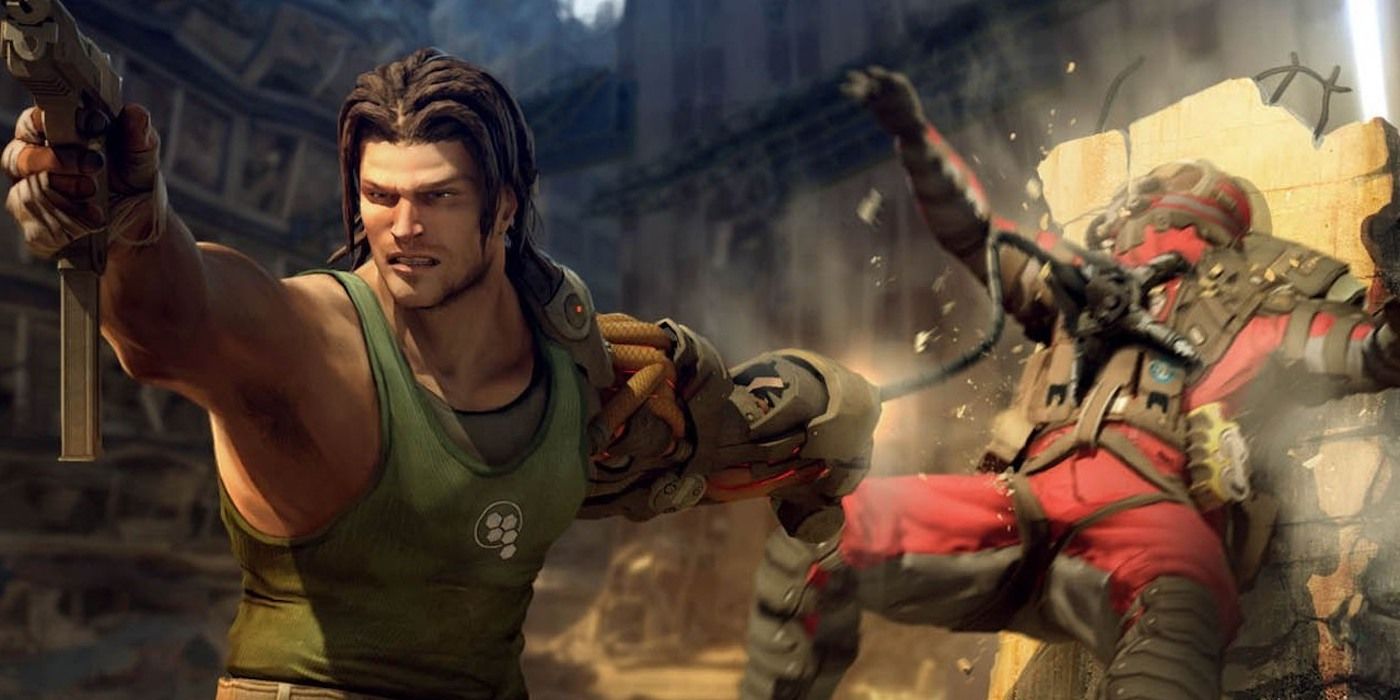
In 2009's Bionic Commando, new main character Nathan Spencer is searching for his missing wife, Emily. While her whereabouts or current condition are never explained, the game does go for a late-game twist implying that, somehow, Emily is part of his bionic arm. Spencer's bionic arm had to be bound to him on both a physical and an emotional level, necessitating the use of someone close. It definitely feels like something that was set up for a sequel; we never know exactly what part of or how Emily is incorporated into Spencer's arm, and whether she's alive or dead is left up in the air. Hell, the process through which a person is incorporated into the arm is never actually explained.
Years earlier, Lament of Innocence did something similar. Here, the story explores the origins of the Belmont clan's feud with Dracula and touches on the creation of the Belmont's iconic Vampire Killer whip. Leon Belmont, the protagonist of the game, rescues his wife Sara from a vampire known as Walter Bernhard. However, it is revealed that Sara has already been bitten and is slowly turning into a vampire. Leon, at Sara's behest, sacrifices her so as to imbue her soul into his whip, which allows the Whip of Alchemy to become strong against vampires, earning it the title Vampire Killer.

Both of these plot points are treated as tragic sacrifices, though it's curious to point out that Leon Belmont ends up having to sacrifice Sara while Spencer's wife is possibly still alive. This plot point ends up working a bit better in Lament of Innocence since it matches the tone and setting of the Castlevania series quite well. In Bionic Commando, though, the twist is sudden and offputting. It doesn't help that it's coupled with the reveal that original Bionic Commando star Super Joe has turned evil.
In the case of Bionic Commando, fans never got an explanation. The series ditched the canon of the 2009 reboot, returning to the original canon and playstyle with Bionic Commando Rearmed 2. Spencer has remained a Capcom staple, though, appearing in Marvel vs. Capcom 3: Fate of Two Worlds and Marvel vs. Capcom Infinite.
Castlevania hasn't really returned to the fact that Sara's spirit is in Vampire Killer, but that doesn't mean the series has retconned it. In fact, the origins of the whip in Lament of Innocence are technically the driving force for every Dracula-focused Castlevania game, as Sara's last wish was to aid Leon Belmont and, by extension, the entire Belmont lineage. By nature of Castlevania's repeated time skips, though, Leon Belmont has never been revisited. Still, its place in history stands alongside Bionic Commando as two poorly received games that managed to embrace the same weird twist.


0 Comments