
In 1983, DC acquired Charlton comics, and with it, their catalog of superhero characters, many created by Steve Ditko. Alan Moore (an admirer of Ditko despite their polar opposite politics), saw an opportunity to use these characters for a story he'd been eager to write: a superhero murder mystery.
Then DC Editor Dick Giordano liked Moore's pitch, minus one detail - the use of the Charlton characters. If Moore used them as planned, then there was no way they could be incorporated into the mainstream DC Universe. Thus, Moore created analogs - the result, Moore & Dave Gibbons' Watchmen, needs no introduction. While the Watchmen cast grew beyond simple stand-ins for the Charlton characters, the shared roots are still clear.
6 Doctor Manhattan Is Based On Captain Atom
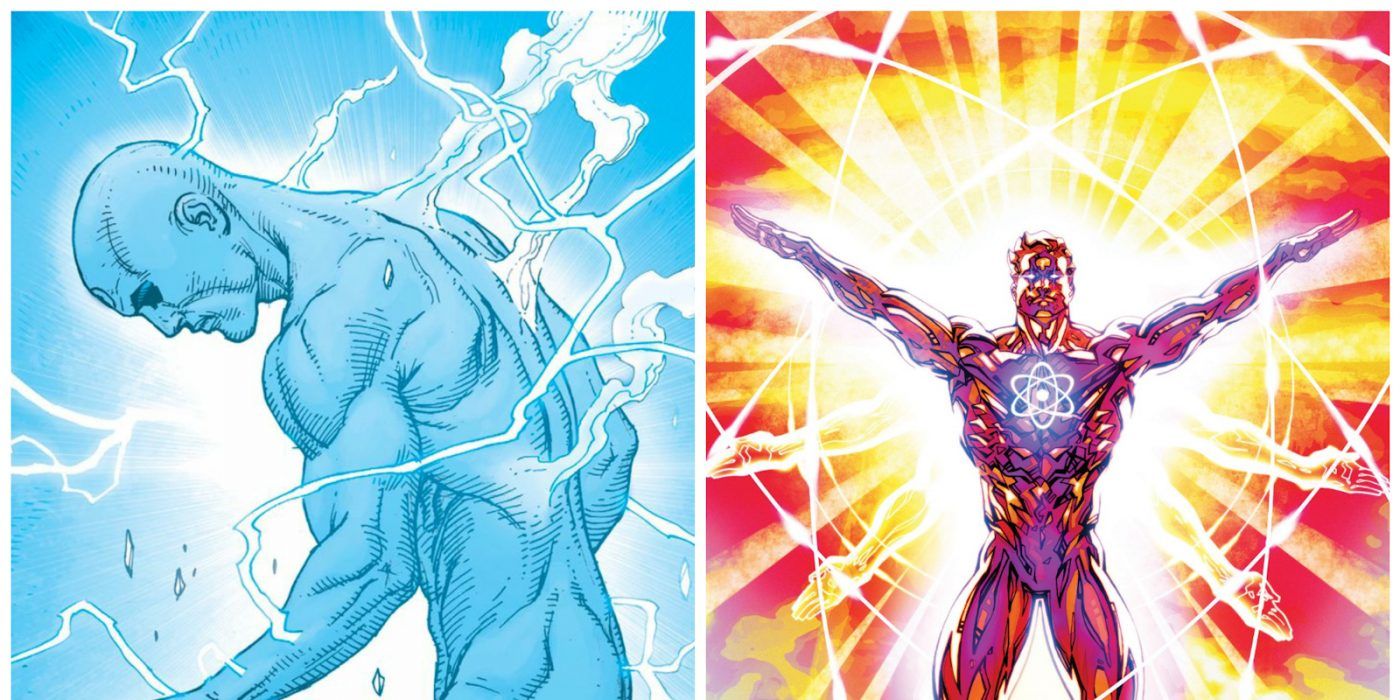
Watchmen may be more grounded than most superhero stories, but there is still one character with actual superpowers, Doctor Manhattan (once Jon Osterman), a physicist atomized then reborn as a god. Manhattan experiences all of time simultaneously, and that plus his power has alienated him from humanity. He's also the US' ultimate nuclear deterrent, fitting the Cold War zeitgeist which hangs over Watchmen.
Manhattan's origin is taken from the original Captain Atom, Allen Adam (created by Joe Gill & Steve Ditko); Atom's fusion-based powers make his existence a more direct allegory for nuclear weapons. The modern, DC-native Captain Atom, Nathanial Adam, has in turn taken recursive inspiration from Doctor Manhattan.
5 Ozymandias Is Based On Thunderbolt
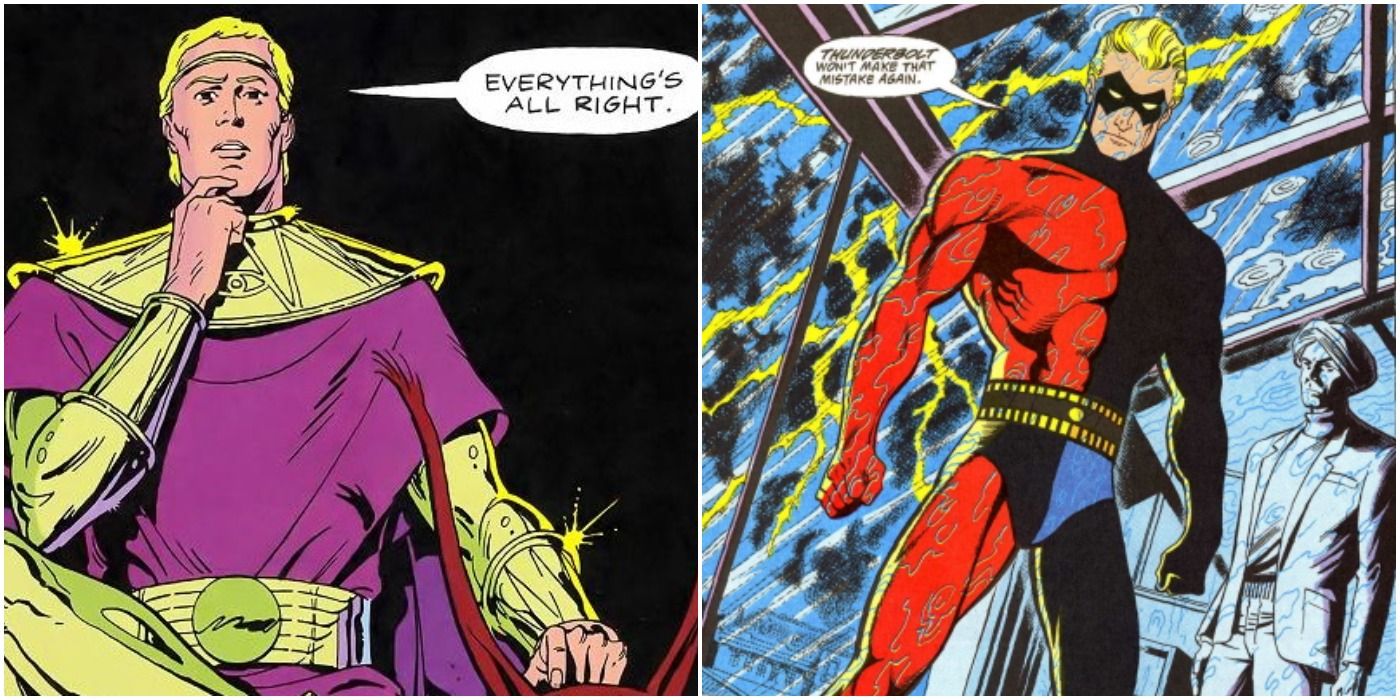
"Look on my works, ye mighty and despair," once wrote Percy Bysshe Shelley of a king named Ozymandias. Watchmen's Ozymandias, Adrian Veidt, intends to make that promise once again. Inspired by the telekinetic Peter Cannon/Thunderbolt (created by Peter Morisi), Veidt lacks the powers of his basis, he makes up it for with his genius intellect, near-superhuman athleticism, and a lethal mix of self-assuredness and ruthlessness.
Thunderbolt is the only Charlton character here not created by Ditko or Joe Gill, and the only one who never found renewed purchase in the DC Universe. However, Ozymandias' character - a billionaire industrialist who considers himself the apex of humanity and whose narcissism has destructive consequences for the world - has no doubt influenced post-Watchmen takes on Lex Luthor.
4 Rorschach Is Based On The Question
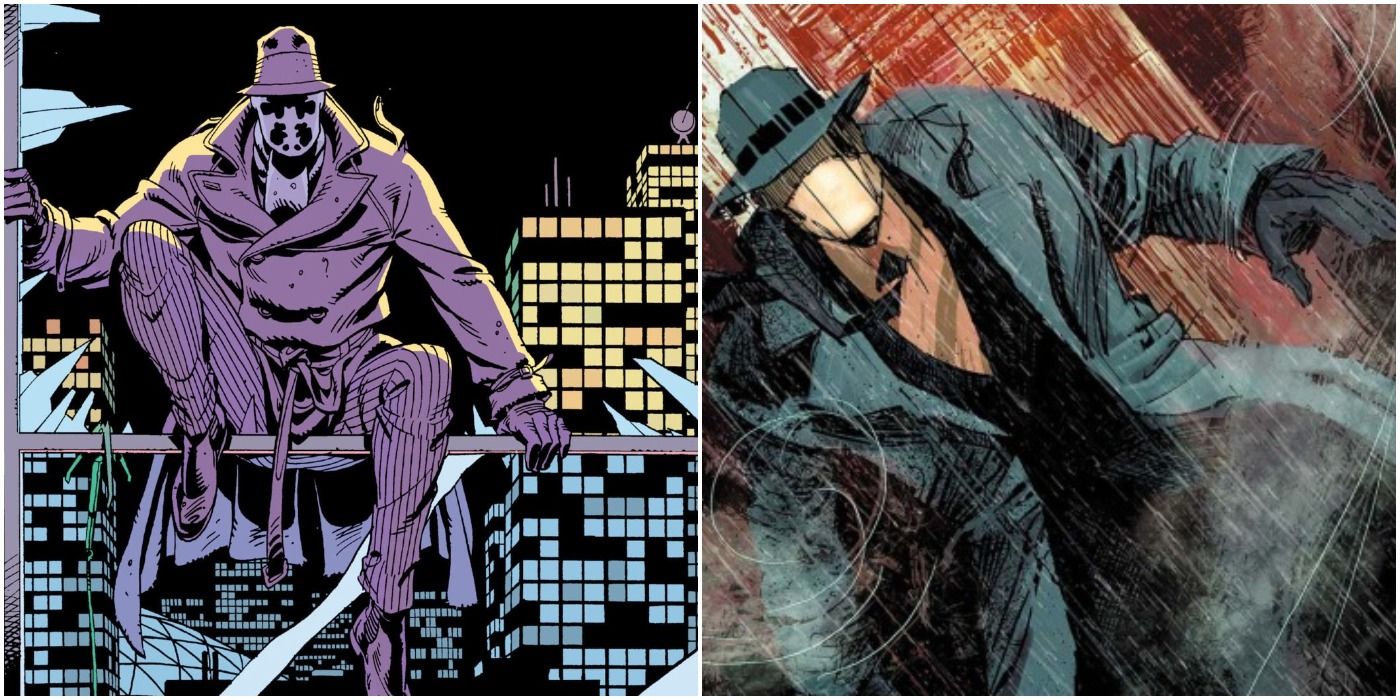
Personality-wise, Rorschach has more in common with Travis Bickle than any superheroes, but the Question was his direct inspiration. Ditko, an Ayn Rand, originally created a character known as "Mr. A," a masked detective and dispenser of Objectivist justice. For Charlton, Ditko in turn created Vic Sage/The Question, a watered-down Mr. A acceptable to the Comics Code Authority.
Moore used these characters to create Rorschach, but owing to his opposite politics, turned Rorschach's paranoia and refusal to compromise into childlike naiveté rather than principle. He also intended Rorschach as "what Batman would be in the real world" - a "nut-job." True enough, rather than an industrialist like Bruce Wayne or investigative reporter like Vic Sage, Walter Kovacs is an unemployed drifter. Like much of Watchmen, Rorschach's influence has been recursive - whenever a mainstream DC book, show, or movie calls for a Rorschach stand-in, expect the Question to rear his masked head.
3 Nite-Owl Is Based On Blue Beetle
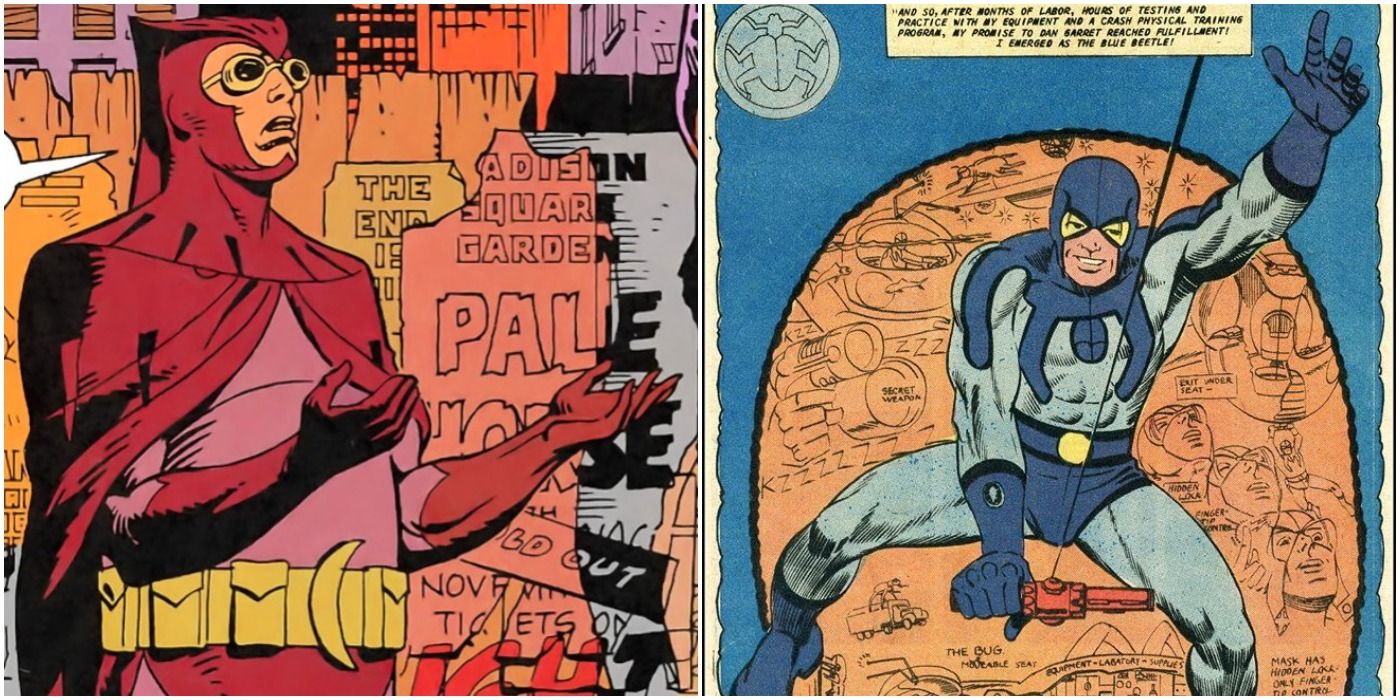
Though his costume, tendency to plan ahead of time, and his basement lair all invoke Silver-Age Batman, the primary inspiration for Nite-Owl lies elsewhere. Specifically, a different gadget-reliant hero: the Blue Beetle. Dan Dreiberg is based on Ted Kord, another Ditko creation. Dan is the second Nite-Owl, after the original Hollis Mason.
This superheroic heritage, with the current hero having assumed the identity from a predecessor, calls to mind Kord's status as the 2nd Blue Beetle, after the original Dan Garrett (created by "Charles Nicholas Wotjowski," a pen-name for multiple creators at Fox Comics). Dan's owl-themed crime-fighting airship, Archie, also bears more than a passing resemblance to Ted's flying vehicle, The Bug.
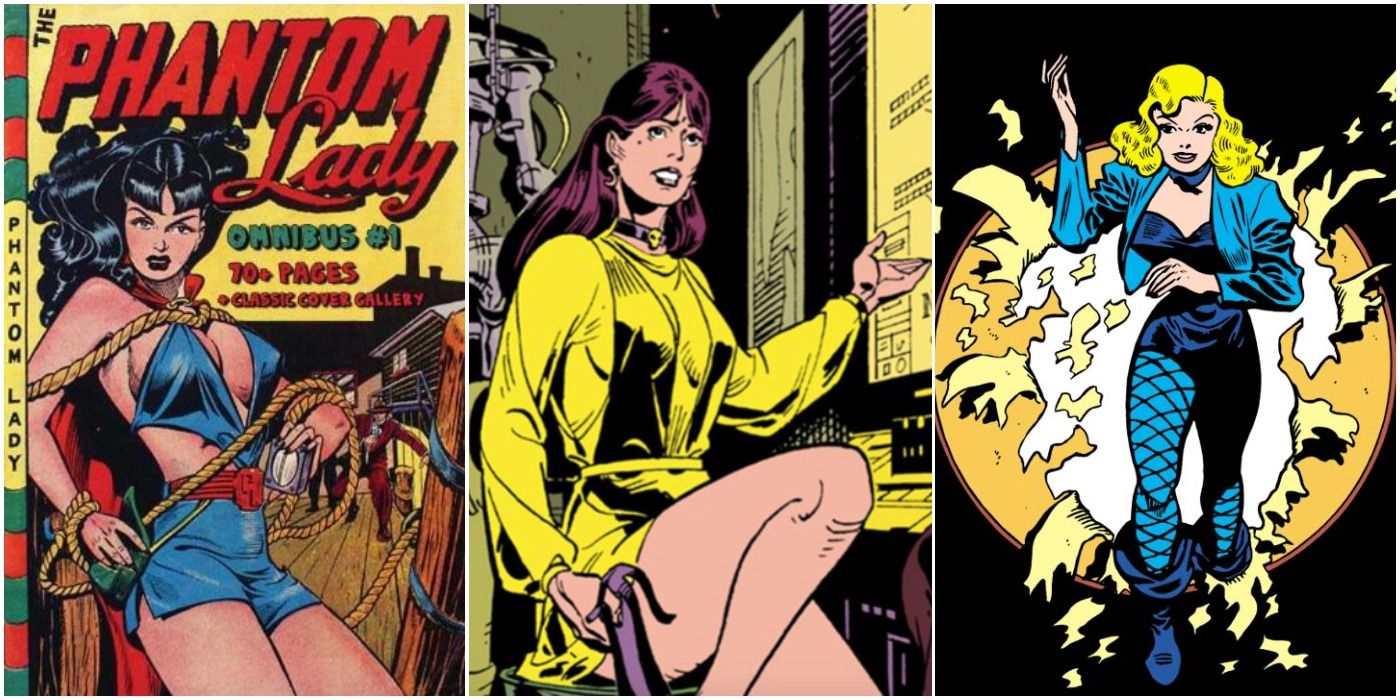
2 The Silk Spectre Is Based On Nightshade (Plus The Phantom Lady And Black Canary)
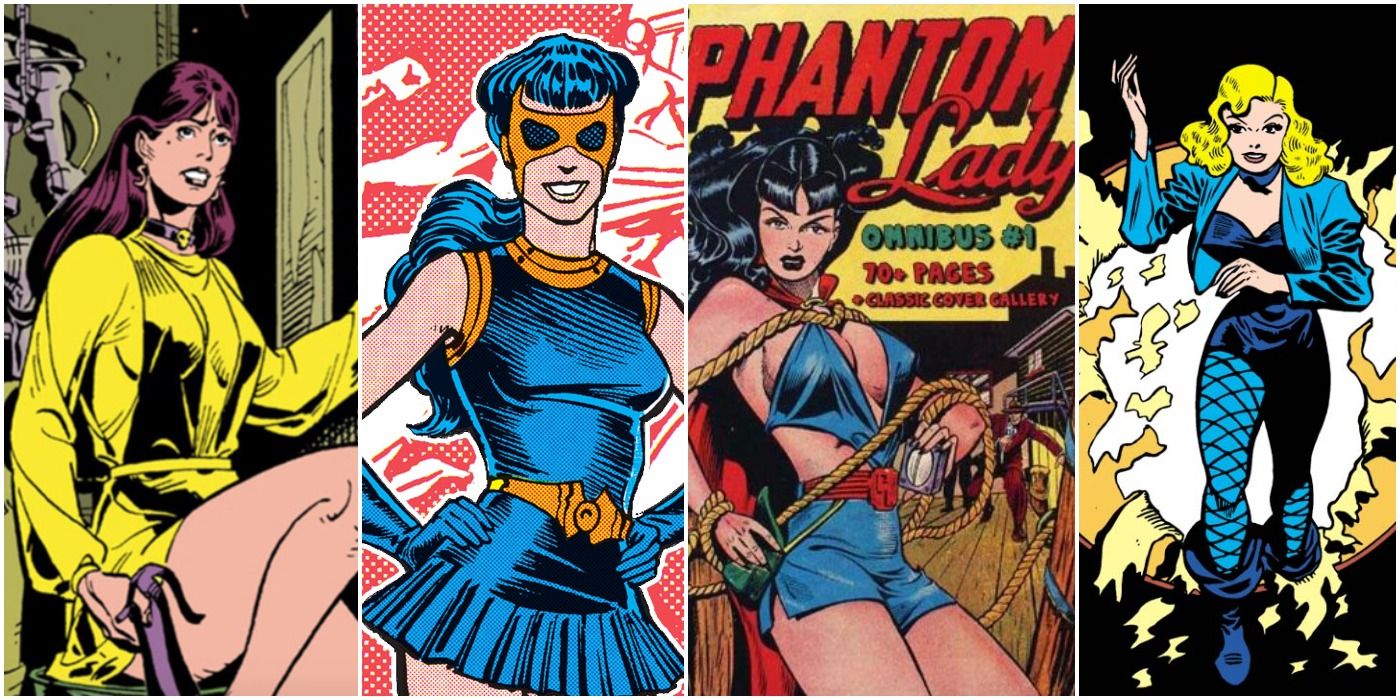
The most prominent woman of the Charlton characters was Night Shade. Introduced in Captain Atom by Ditko and David Kaler as a sometimes love interest for the title character, Eve Eden was a government spy in possession of the power to manipulate shadows.
Despite her presence in the original pitch, Night Shade fell by the wayside as Moore and Gibbons crafted Watchmen's female hero: the Silk Spectre. Like Nite-Owl, the Silk Spectre is an inherited identity, passed down from Sally Jupiter to her daughter Laurie. The inspiration for this was not one of Charlton's characters, but instead one native to DC - Black Canary, an identity used in the Golden Age by Dinah Drake then her daughter, Dinah Lance. For Sally's Silk Spectre, Moore & Gibbons also drew on Eisner & Iger's Golden Age heroine, The Phantom Lady.
1 The Comedian Is Based On Peacemaker
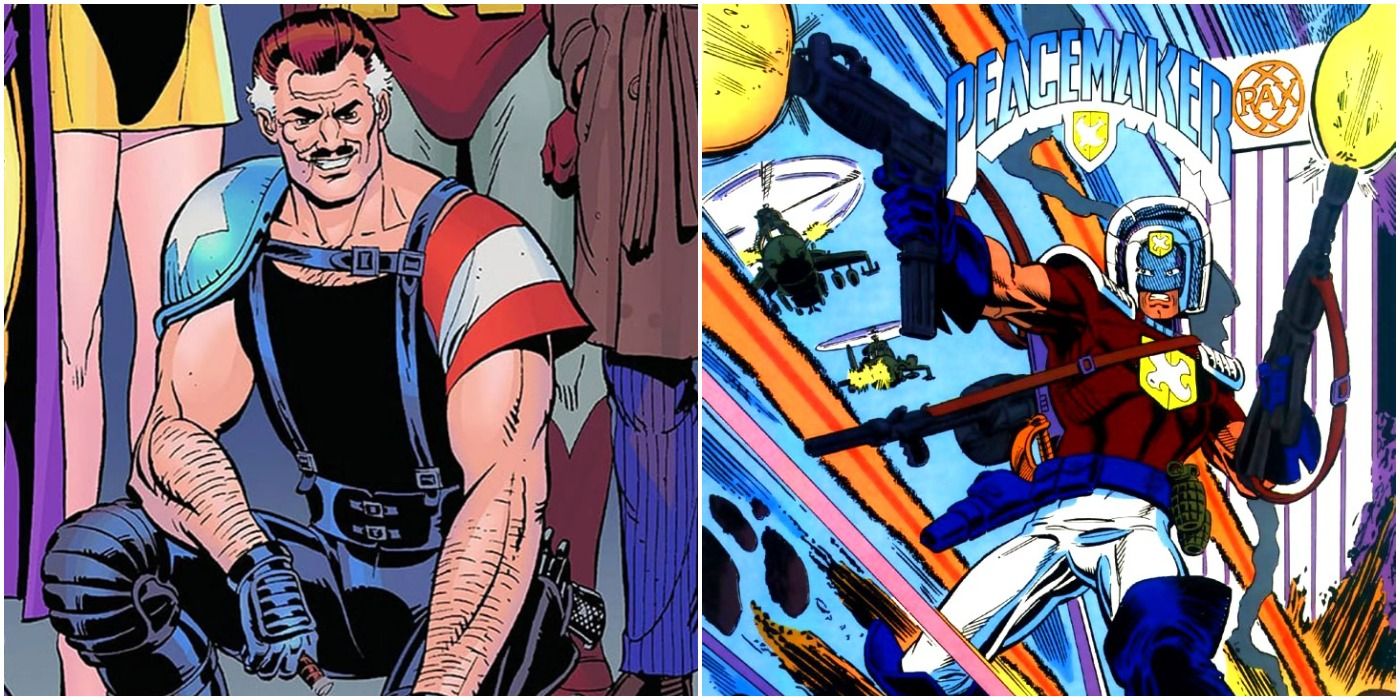
Every murder mystery needs a victim, and for Watchmen that's Edward Blake, aka the Comedian. Before Watchmen, what was the pitch's original, Charlton-inspired title? "Who Killed The Peacemaker?" Peacemaker, aka Christopher Smith, was an agent of peace but a dispenser of violence - his adventures featured him fighting many foreign dictators. Though Smith was not a Ditko creation (instead, he sprang from the minds of Joe Gill and Pat Boyette), his moral absolutism (peace at any cost) still makes him feel right at home with the other Charlton characters.
Peacemaker's role enforcing peace (or an American definition of that concept, at least) across the globe no doubt inspired the Comedian's tour in Vietnam - Watchmen presents America's triumph in that war as one of the biggest ripples that superheroes' existence had on the timeline. The Suicide Squad, which fittingly sees Peacemaker infiltrate the island nation Corto Maltese along with the rest of that team, has given the character a resurgence in exposure; beforehand, his inspiration for the Comedian was his most noteworthy role in comic history.


0 Comments