
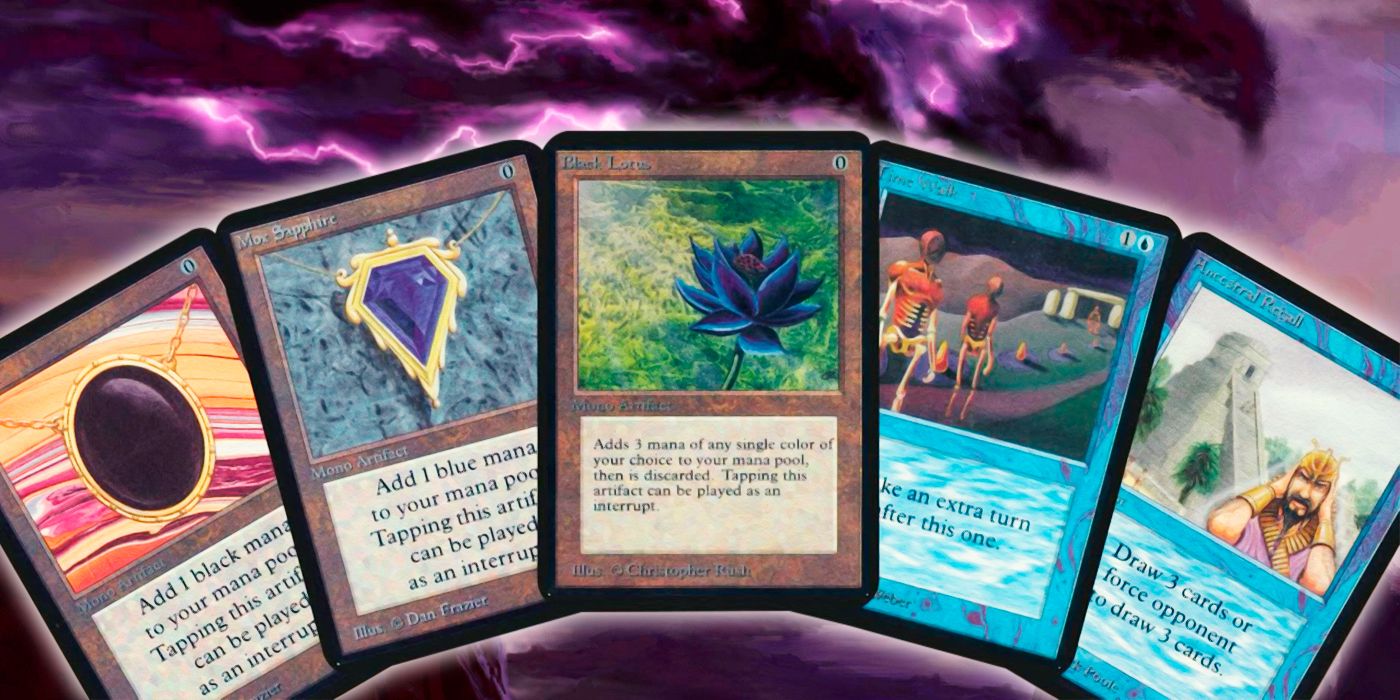
Magic: The Gathering is the world's first-ever trading card game, and Dr. Richard Garfield and his associates launched the game's first set, Alpha, back in August 1993. The game was very different then, with a much smaller card pool, less lore and many rules that fell out of favor, such as ante, a full-blown gambling component of the game.
As the game's 30th anniversary draws nearer, most Magic cards from the mid-1990s lay forgotten -- but not all of them. The Power Nine cards are stronger than ever, and they have actually aged too well. Just like the underpowered cards of early Magic, the dreaded Power Nine represent just how far the game has come, and how some strategies never get old.
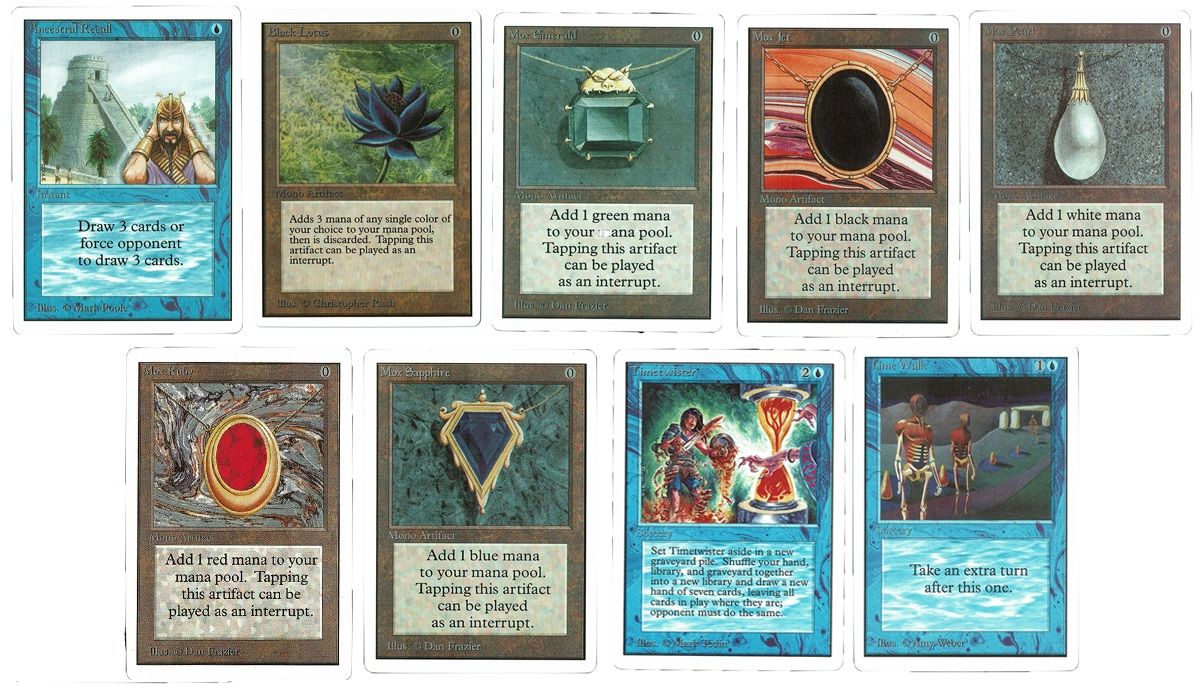
Many early Magic cards were highly experimental, and the result was an uneven power distribution among Alpha's cards. Many of these cards are underpowered by today's standards or wouldn't work well in special products or formats, such as the Masters sets or the booster draft Limited format. In this awkward context, Wizards of the Coast accidentally created nine overpowered cards whose immense gameplay utility wasn't appreciated until after the fact. Those later became known as the Power Nine.
These nine overpowered cards were unfair in their day, and they are still unfair in modern Magic, even with an exponentially larger card pool and many more formats and deck archetypes. Wizards underestimated the utility of cheaply making more mana or taking an extra turn, or the inherent card advantage of drawing three cards so easily. Black Lotus and the cycle of five Moxes allow players to cheaply and easily accelerate their mana by one or more turns, often allowing players to perform game-winning combos and other moves on the first turn.
Ancestral Recall, meanwhile, draws three cards for an unusually low price, and generating cheap card advantage like that is a significant advantage that most other cards cannot compete with. Time Walk takes an extra turn for just {1}U, and for context, modern extra-turn cards usually have a converted mana cost of 5 or higher unless they come with significant drawbacks.

The Power Nine cards quickly served as a cautionary tale for card design, and Wizards of the Coast took note. Soon, the effects found in these cards began appearing in better-balanced cards. Examples include Tidings, a blue sorcery that draws three cards like Ancestral recall, but at the cost of {3}UU, and Time Warp, a Time Walk that costs {3}UU as well. Wizards of the Coast also learned that accelerating mana can quickly get out of control in the game, so mana abilities are now much slower and tamer than the five Moxes and the legendary Black Lotus. Today's "mana rock" artifacts cost mana, as opposed to the Power Nine's free artifacts.
The Power Nine are still played today, despite many bans and their impressive price tags. These notorious cards aew banned in Legacy, and they are restricted in Vintage, with no more than one copy allowed in a deck, including sideboards. Notably, attempts to make "fixed" versions of the Power Nine, such as Treasure Cruise in the Khans of Tarkir set, can still become overpowered, and thus Treasure Cruise is banned in Legacy and restricted in Vintage, just like the Ancestral Recall it sought to emulate.


0 Comments